
If you’re trying to improve strength, build lean muscle, or simply get more out of your gym sessions, understanding how to use creatine correctly is essential. Creatine is one of the most researched supplements in sports nutrition, and it plays a key role in improving energy output during high-intensity exercise.
One of the most common questions beginners ask is whether they should use a creatine loading phase or just take a daily dose from the start.
In the following sections, you’ll learn exactly how creatine works, what the loading phase actually does, how to take it properly, the best timing, and what to combine it with, plus common mistakes to avoid so you can get the most out of your supplementation from day one.
What Is Creatine?
Creatine is a naturally occurring compound stored in your muscles and used to produce quick energy during short, intense movements like lifting weights or sprinting.
When you supplement with creatine monohydrate, you increase your muscle stores of phosphocreatine, which helps regenerate ATP, your body’s main energy source for explosive effort. Over time, this supports improved strength, performance, and training volume.
What Is the Creatine Loading Phase?
The creatine loading phase is a short-term method designed to saturate your muscles with creatine faster.
Instead of waiting 3–4 weeks for full saturation through a standard dose, loading allows you to reach optimal levels within about a week.
A typical loading approach:
- Around 20g of creatine per day
- Split into 4 doses of 5g
- Followed for 5–7 days
After this, you move into a maintenance phase of 3–5g daily.
How to Use Creatine Properly
Daily creatine dosage
For most people, 3–5g per day is enough to maintain muscle saturation once loading is complete. If you choose not to load, this same dose still works; it just takes longer to see full benefits.
Creatine monohydrate: How to take it
Mix your creatine with water or a protein shake and take it consistently every day, including rest days. Consistency matters more than perfect timing.
Best Time to Take Creatine
When it comes to when to take creatine, timing is flexible.
Some prefer taking it:
- Post-workout with a meal or shake
- Pre-workout for routine consistency
- Any time of day that fits your schedule
The most important factor is daily consistency. Your muscle stores build over time, not immediately after one dose.
What to Take Creatine With
Creatine works well on its own, but pairing it with certain nutrients can support uptake.
You can take it with:
- Water (simple and effective)
- Protein shakes after training
- Meals containing carbohydrates, which may help with absorption
There’s no need for complicated stacking. A simple and consistent approach works best.
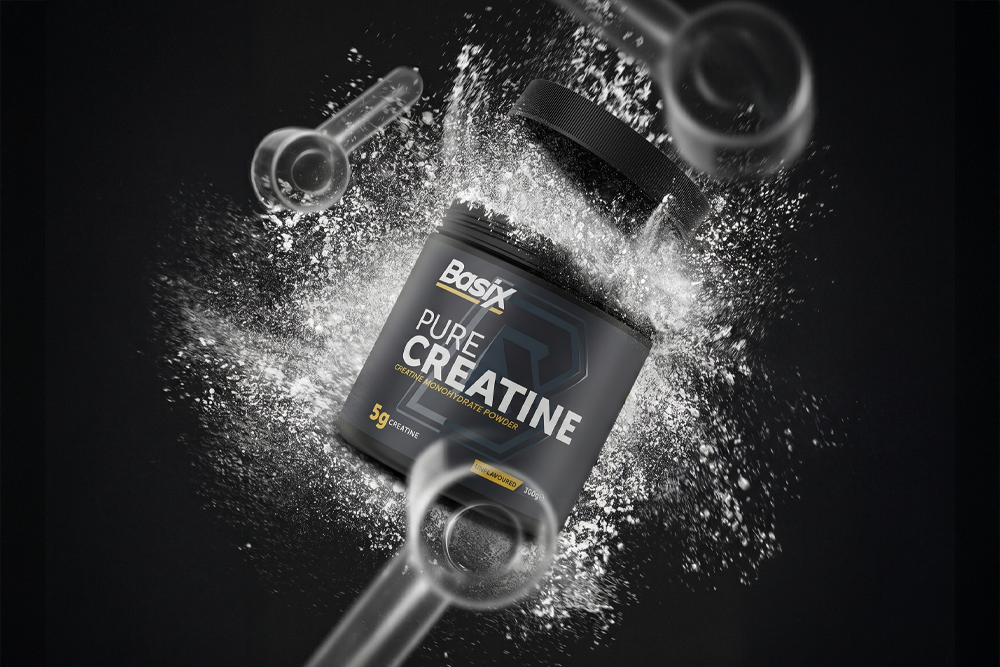
For those choosing a high-quality, unflavoured option, Basix Pure Creatine is made from 100% pure creatine monohydrate with no added fillers, sweeteners, or additives. It is tasteless and easily mixes into water or shakes, making it ideal for daily use.
If you prefer a premium-grade formula, Basix Creatine Made with Creapure uses Creapure, a high-purity creatine monohydrate produced in Germany and known for its strict quality control and consistency. It is micronised for better solubility, helping it dissolve quickly and integrate easily into your routine.
What Happens During the Loading Phase?
During the loading phase, your muscles rapidly increase their creatine stores. This can lead to:
- Faster strength improvements in training
- Better workout performance
- Slight increase in body weight due to water being stored in muscles
This is a normal response and reflects improved muscle hydration, not fat gain.
Loading vs. Maintenance Creatine
If you are comparing loading with maintenance creatine, both approaches work:
- Loading phase: Faster results (around 1 week)
- No loading: Gradual saturation (3–4 weeks)
Both lead to the same long-term outcome. The choice depends on how quickly you want to feel the effects.
After the loading phase, you simply continue with a maintenance dose of 3–5g daily. This keeps your muscle creatine stores fully saturated and supports ongoing improvements in strength, power, and training performance. There’s no need to cycle off creatine; consistency is what maintains results.
Common Mistakes When Using Creatine
To get the most out of your supplement, avoid these common mistakes:
- Skipping days or taking it inconsistently
- Not staying hydrated throughout the day
- Expecting immediate visible muscle changes
- Overthinking timing instead of focusing on consistency
- Stopping after loading instead of continuing maintenance
Conclusion
Understanding how to use creatine properly comes down to keeping things simple and consistent. Whether you choose a creatine loading phase or start directly with a daily dose, both approaches can support strength and muscle growth when applied correctly.
The key is to focus less on perfect timing and more on long-term habits, daily intake, proper hydration, and consistent training. Most people see the best results when creatine becomes part of their routine rather than something they overthink.
Pair your creatine intake with your post-workout routine or main daily meal so it becomes automatic and easy to maintain. Over time, this consistency is what helps you fully benefit from creatine’s performance support, especially when combined with structured training and adequate nutrition.
To support your routine, you can explore all Basix Nutrition products, including high-quality creatine options designed for daily performance, recovery, and strength progression.
FAQs
Is Creatine Safe?
Creatine is widely studied and considered safe for long-term use in healthy individuals. The most important habit is drinking enough water daily, especially during the loading phase when intake is higher.
What is the best way to take creatine?
The best way is to take 3–5g daily with water or a shake, consistently at any time of day.
How should beginners take creatine?
Beginners can start with 3–5g daily without loading. It is simple and effective.
Is it better to take creatine before or after a workout?
There is no major difference. Post-workout with a meal is convenient, but consistency matters more.
What not to do while taking creatine?
Avoid inconsistent use, poor hydration, and expecting instant results.
What are two disadvantages of creatine?
Some people may experience mild bloating or temporary water retention in muscles.
How much creatine for 70 kg?
A standard dose of 3–5g daily is suitable regardless of body weight for most individuals.
Does creatine affect sleep?
No, creatine does not negatively affect sleep when taken as recommended.
Should I take creatine every day?
Yes, daily use is important to maintain muscle saturation, even on rest days.
Is 5g of creatine enough to build muscle?
Yes, 5g daily is sufficient to support strength and muscle development over time.